
The Forgotten 1986 Coup Attempt That Shook Ghana – Togo Relations, The Night Lomé Went to War
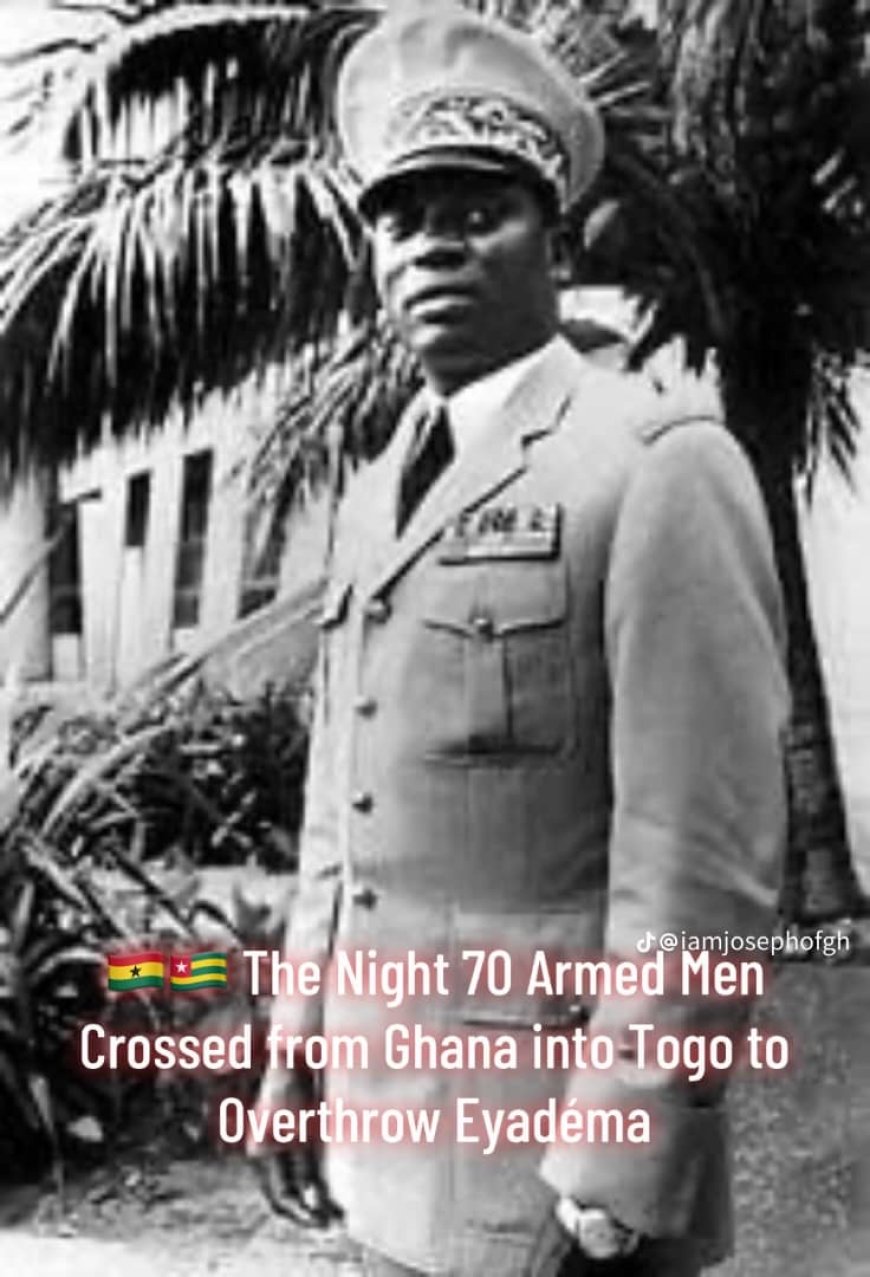
On September 23th–24th, 1986, about 70 armed Togolese dissidents crossed from Ghana into Lomé and launched a failed attempt to overthrow President Gnassingbé Eyadéma.
 HENRY GERCHI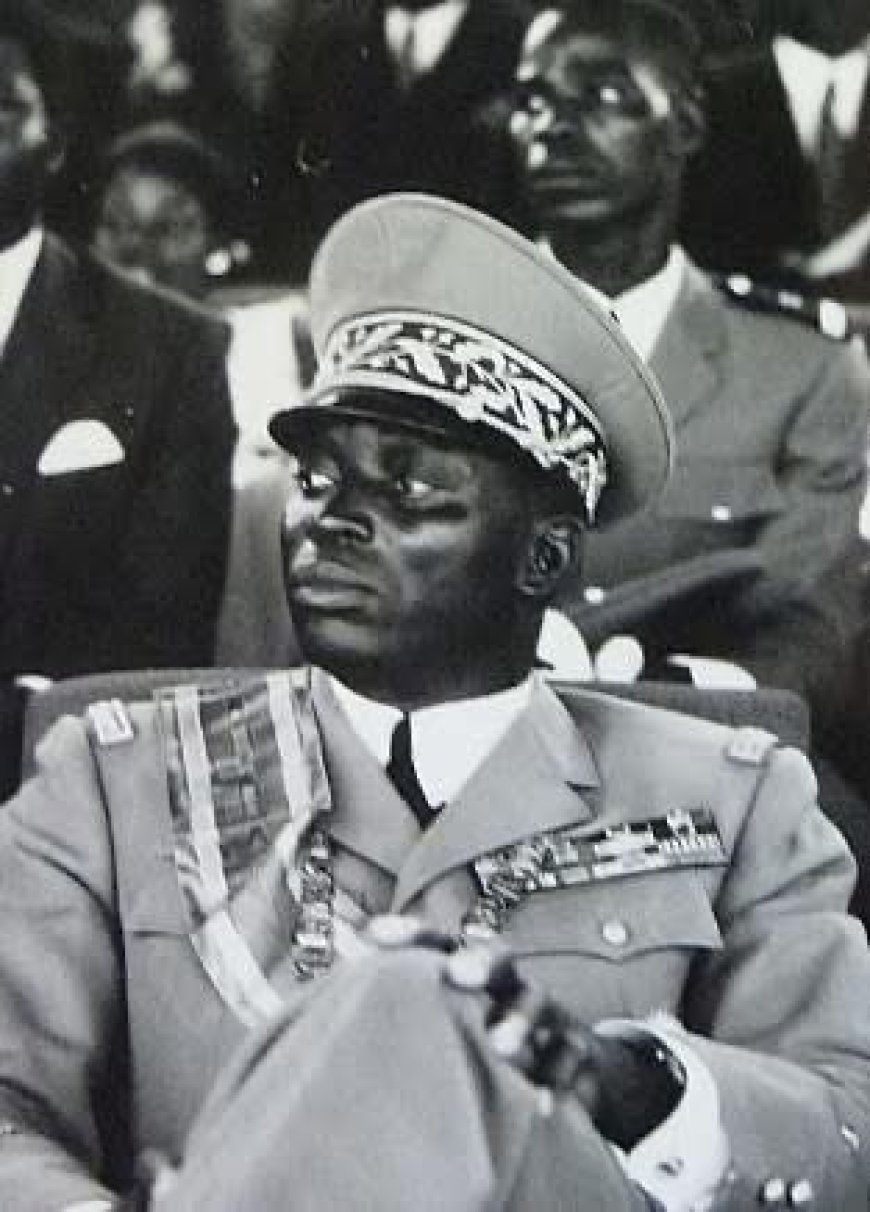
On the night of September 23, 1986, the normally quiet streets of Lomé, Togo, were transformed into a battlefield.


A heavily armed group of about 70 men crossed into Togo from neighbouring Ghana and launched a coordinated assault on key government and military installations in an apparent attempt to overthrow the long-serving Togolese President, General Gnassingbé Eyadéma.
The attack failed. Eyadéma remained in power. But the consequences extended far beyond the gunfire in Lomé. The incident triggered a diplomatic crisis between Ghana and Togo, led to the closure of their common border, brought French troops into Togo and further deepened the already strained relationship between Eyadéma's government and Ghana's Provisional National Defence Council (PNDC), then led by Flight Lieutenant Jerry John Rawlings.
Nearly four decades later, the episode remains one of the lesser-known but significant chapters in the shared history of Ghana and Togo.
The night the commandos entered Lomé
According to contemporary reports, the armed group entered Lomé from the direction of Ghana on September 23, 1986, reportedly using between 30 and 40 vehicles.
United Press International reported at the time that heavily armed commandos crossed from Ghana and attacked the military camp where President Eyadéma was staying. The attackers were armed with automatic weapons and rocket launchers and also targeted the national radio station and the headquarters of the ruling Rally of the Togolese People (RPT).
The U.S. State Department's historical account later described the force as approximately 70 armed Togolese dissidents who crossed into Lomé from Ghana in an unsuccessful attempt to overthrow Eyadéma's government.
A declassified U.S. intelligence assessment provides an even more detailed account. It states that approximately 70 heavily armed men entered Lomé from the Ghanaian border town of Aflao. According to the U.S. Embassy's assessment, the group consisted primarily of Togolese dissidents, but also included two Ghanaian soldiers, a Malian, a Burkinabè and other African nationals.
The attackers apparently had divided objectives. According to the U.S. assessment, one group was expected to ambush and kill Eyadéma, while another was assigned to attack government targets in central Lomé.
Eyadéma becomes the target
The principal objective appears to have been the removal of President Eyadéma.
The commandos attacked the military installation where the president was staying and attempted to seize strategic locations that could have helped them control communications and the political machinery of the state.
Among their targets were the national radio station and the RPT headquarters. Controlling the radio station would have been particularly important to any coup plot because it could have provided the attackers with a means of announcing the fall of the government and communicating with the population.
But the operation did not go according to plan.
The attackers failed to reach their principal objectives, and Togolese security forces mounted a counterattack. Contemporary reports said Eyadéma himself took part in the response.
The fighting continued through the night, with gunfire reported in different parts of Lomé. Togolese forces eventually regained control of the situation.
Death, arrests and a German businessman
The immediate human cost was significant.
Togolese state radio reported that seven of the attackers had been killed and six civilians had died. Nineteen members of the armed group were captured. A West German businessman was also reported killed during the fighting. citeturn0search1
Contemporary reports therefore placed the immediate death toll at approximately 13, although other historical sources have subsequently reported different figures.
The U.S. State Department's 1986 human-rights report also recorded that approximately 25 people were arrested in September in connection with the attempted coup and related cases. In December, a major public trial followed: three people were acquitted, 13 were sentenced to death, 14 to life imprisonment, and others received shorter prison terms.
The differing casualty and arrest figures illustrate one of the difficulties of reconstructing the episode: much of the initial information came from governments and state-controlled media operating during a period of intense political tension.
Was Ghana responsible?
This remains the most controversial question surrounding the 1986 attack.
One fact is firmly established: the attackers entered Togo from Ghana.
The U.S. State Department recorded that approximately 70 armed Togolese dissidents crossed into Lomé from Ghana. The declassified CIA assessment specifically identified Aflao as the point from which the attackers entered Togo.
But saying that the attackers entered from Ghana is not the same as saying that the Ghanaian government ordered the attack.
The Togolese government accused Ghana of being connected to the operation. Ghana, however, denied responsibility.
In an immediate response, Ghanaian Information Minister Kofi Totobi said Togolese security forces had fired across the border at Ghanaian army personnel who were conducting a patrol. Ghana's Radio Ghana described the incident as an alleged uprising rather than acknowledging an attempted coup against Eyadéma.
This distinction is essential.
The historical evidence does not justify simply describing the episode as “the Ghanaian Army's invasion of Togo.”
Nor does it allow the more absolute conclusion that there was no Ghanaian connection whatsoever.
There is evidence of Ghanaian individuals being present among the attackers. The declassified U.S. intelligence report identified two Ghanaian soldiers among the approximately 70-man force.
However, the presence of Ghanaian soldiers does not, by itself, establish that Rawlings' PNDC government officially ordered the operation.
The Rawlings–Eyadéma relationship
The attack occurred against a background of already deteriorating relations between Accra and Lomé.
Ghana was being governed by the PNDC under Jerry John Rawlings, while Togo was under the authoritarian rule of Gnassingbé Eyadéma.
The two governments had developed deep suspicions about each other's political intentions.
Historian Paul Nugent has documented how the Eyadéma regime increasingly became convinced that Ghana's PNDC was supporting Togolese dissidents, particularly members of the Olympio family who were living in Accra. Nugent identifies the 1986 coup attempt, which the Togolese regime traced to Ghana, as a major factor behind the renewed closure of the Ghana–Togo border.
The broader political environment was therefore extremely sensitive.
Togo had opposition figures operating from abroad, while Ghana had become a place where some Togolese political opponents could live and organize. For the Eyadéma government, the presence of its opponents in Ghana represented a potential security threat.
For Ghana, however, allegations that its government was sponsoring armed attacks against a neighbouring state were serious accusations that could have had major regional consequences.
The Olympio connection
The name of the Olympio family also appears in accounts of the episode.
The Olympios were one of the most prominent political families in Togo. Sylvanus Olympio had been Togo's first president, and his son Gilchrist Olympio later became a leading opposition figure.
Historical accounts of the 1986 episode have associated the attempted operation with Togolese opposition networks and the Olympio camp.
However, claims concerning who specifically planned, financed or directed the armed operation must be treated carefully. Some of the allegations came directly from the Eyadéma government, and not every allegation has been independently established.
This is one reason why the 1986 episode should be approached as a historical investigation rather than as a simple story with one uncontested version of events.
Were the attackers trained in Ghana?
President Eyadéma publicly alleged that the attackers had been trained in Ghana.
French newspaper Le Monde, reporting from Lomé shortly after the attack, quoted Eyadéma as saying that the perpetrators had been trained in Ghana and may have benefited from assistance from people inside Lomé. The report also described weapons captured from the commandos, including assault rifles, grenades, knives and explosives.
The allegation is also reflected in archival U.S. records.
However, these claims should be presented as Togolese government allegations, rather than as unquestionable proof that the Ghanaian government itself organized the operation.
That distinction is particularly important when discussing the role of the PNDC.
A heavily armed but poorly trained force
Interestingly, the declassified U.S. intelligence assessment concluded that the attackers were heavily armed but apparently poorly trained.
The assessment suggested that some of the attackers might not even have known how to properly use some of the weapons they possessed.
This may help explain why the operation failed.
The commandos possessed substantial firepower and managed to enter the capital, but they could not translate their initial surprise and military capability into control of the government.
Their failure to eliminate Eyadéma or seize the main government communication facilities allowed Togolese forces to regroup and crush the attack.
Ghana–Togo border closed
The consequences were immediate.
Togo closed its border with Ghana following the attack, while a curfew was imposed in Lomé and residents were ordered to remain indoors.
The border closure was not simply a temporary reaction.
Paul Nugent's research records that the Ghana–Togo border remained closed from September 1986 until October 1987, reflecting the depth of the crisis between the two governments.
For communities living along the border, the consequences were significant.
The Ghana–Togo boundary separates communities that have historically maintained strong family, cultural, linguistic and commercial connections. Consequently, political decisions taken in Accra and Lomé could have immediate consequences for ordinary people on both sides.
The closure therefore became more than a diplomatic gesture. It disrupted the movement of people and goods across a border that had long been socially interconnected.
France comes to Eyadéma's defence
With the coup attempt defeated, Eyadéma sought outside military assistance.
France responded.
On September 26, French troops and aircraft were sent to Togo under the countries' existing defence arrangements. Contemporary reporting said approximately 200 French paratroopers were deployed to Lomé. citeturn0search18
The French intervention was significant.
It demonstrated that the attempted coup had transformed from a domestic Togolese security incident into an international crisis involving Ghana, Togo and France.
Togo's relationship with France was particularly important because France had maintained extensive political, economic and military relationships with several former French colonies in West Africa.
The French deployment sent a clear message that Paris was prepared to support the Eyadéma government against an armed attempt to overthrow it.
Zaire also enters the picture
The international response did not end with France.
Contemporary and later accounts also record the arrival of troops from Zaire, then ruled by Mobutu Sese Seko, in support of Eyadéma.
The arrival of Mobutu in Lomé was publicly used by the Togolese government to demonstrate regional solidarity with Eyadéma. Le Monde reported on September 30 that civilians and RPT supporters had been mobilized to welcome the Zairian leader, while Eyadéma displayed weapons captured from the attackers.
The episode therefore demonstrated the geopolitical realities of Cold War-era West Africa, where domestic political conflicts could quickly attract the attention and involvement of outside governments.
The political crackdown
The failed coup also strengthened the hand of the Eyadéma government.
The Togolese authorities pursued suspected participants and associates.
The U.S. State Department's 1986 human-rights report recorded trials involving people accused of participating in the coup attempt. Thirteen were sentenced to death, while 14 received life imprisonment.
The government's response also reinforced the political narrative that Togo was under attack from foreign-supported enemies.
This was especially significant because the attack came at a time when Eyadéma's political system was already heavily controlled.
Only months later, in December 1986, Eyadéma was re-elected to another seven-year presidential term with 99.5 percent of the vote in an uncontested election.
The failed coup therefore did not weaken Eyadéma's immediate hold on power. If anything, it provided the government with further justification for heightened security and political repression.
Rawlings and Eyadéma: two neighbouring leaders, two different political trajectories
The episode also illustrates the complicated relationship between Jerry Rawlings and Gnassingbé Eyadéma.
Both men came to power through military coups.
Rawlings first seized power in Ghana in 1979 and later returned to power in December 1981, eventually transforming Ghana's political system toward constitutional democracy in the early 1990s.
Eyadéma, meanwhile, seized power in Togo in 1967 and remained the country's dominant political figure for decades.
Their governments therefore had very different political relationships with opposition movements and with the military.
The 1986 attack showed how quickly their competing political interests could become a cross-border security problem.
Not simply a Ghanaian invasion
Perhaps the most important lesson from the episode is the need to distinguish between where an armed group came from and who officially ordered it.
The historical evidence strongly supports the following:
The attackers were armed dissidents who entered Togo from Ghana.
There is also evidence that some Ghanaian military personnel were among them.
There were serious Togolese allegations that the operation had been trained or supported from Ghana, and the Eyadéma government explicitly linked the operation to Togolese opposition networks operating from abroad.
But that is not the same as establishing that the Ghanaian government or Ghanaian Army officially invaded Togo.
The distinction matters because historical events become distorted when allegations made during a political crisis are later repeated as established facts.
The available evidence instead points to a complicated armed operation involving Togolese dissidents, cross-border networks and alleged assistance from individuals connected to Ghana and possibly elsewhere in the region.
A forgotten chapter in Ghana–Togo history
The September 1986 attack is easy to overlook today.
It lasted only one night, the coup failed, and Eyadéma remained in office. But its consequences were much longer-lasting.
The episode:
-
exposed the deep hostility between the Eyadéma government and sections of the Togolese opposition;
-
intensified Ghana–Togo diplomatic tensions;
-
led to the closure of the common border;
-
brought French military forces into Togo;
-
involved wider regional actors, including Zaire;
-
resulted in arrests, trials and death sentences;
-
and reinforced Eyadéma's grip on political power.
It also demonstrated the vulnerability of West African states to political crises spreading across borders.
For Ghana and Togo, the episode remains a reminder that their shared history is not only a story of trade, migration and cultural connections. It also includes periods of suspicion, political exile, armed resistance and military confrontation.
The historical lesson
Nearly 40 years later, the September 1986 Lomé attack deserves to be remembered not simply as a failed coup but as a defining moment in the turbulent relationship between Ghana and Togo during the Cold War era.
The established historical record shows that approximately 70 armed dissidents crossed from Ghana into Lomé and attempted to overthrow President Eyadéma. The operation failed, and Togolese forces regained control.
What remains more complicated is the question of sponsorship.
Togo accused Ghana. Ghana denied responsibility. Evidence indicates that Ghanaian personnel were among the attackers, while later historical research documents the Togolese regime's longstanding suspicion that Rawlings' PNDC was supporting Togolese dissidents.
That uncertainty is not a weakness in the historical record. It is part of the story.
The September 1986 crisis therefore deserves to be remembered as a cross-border armed attempt by Togolese dissidents, launched from Ghanaian territory, whose alleged foreign support remains contested but whose impact on Ghana–Togo relations was undeniable.
A forgotten chapter in the shared history of two neighbouring West African countries.
????? Ghana & Togo: A shared border, a shared history, and a complicated past.
JHNewsOnline.com - Preserving Ghana's history, one story at a time.
Sources: Contemporary reports from United Press International and the Los Angeles Times; U.S. State Department historical records; declassified U.S. intelligence material; historical research by Paul Nugent on the Ghana–Togo border; and contemporary French reporting from Le Monde.